
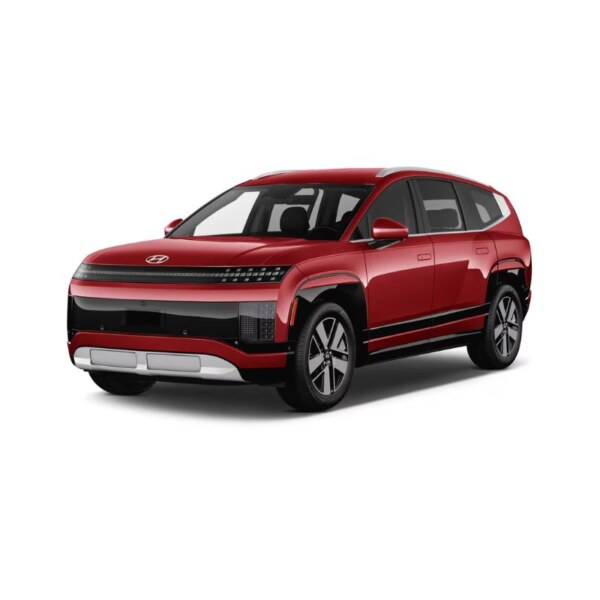
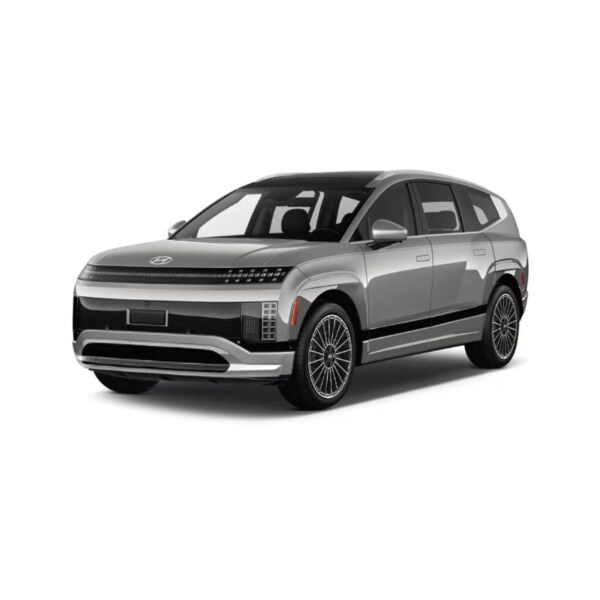
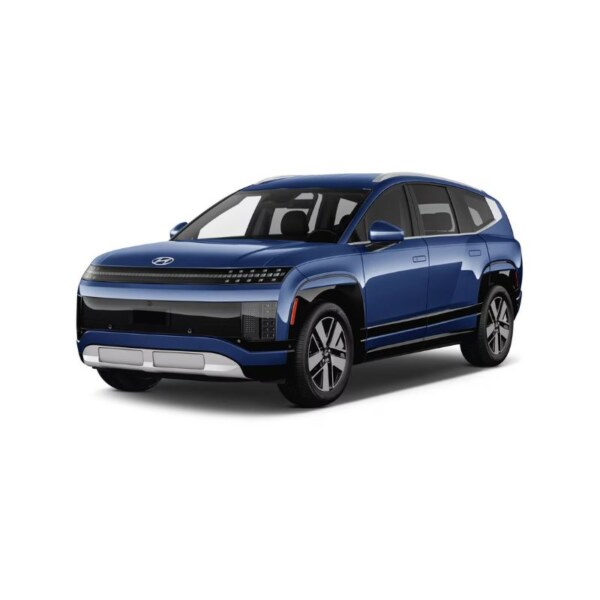
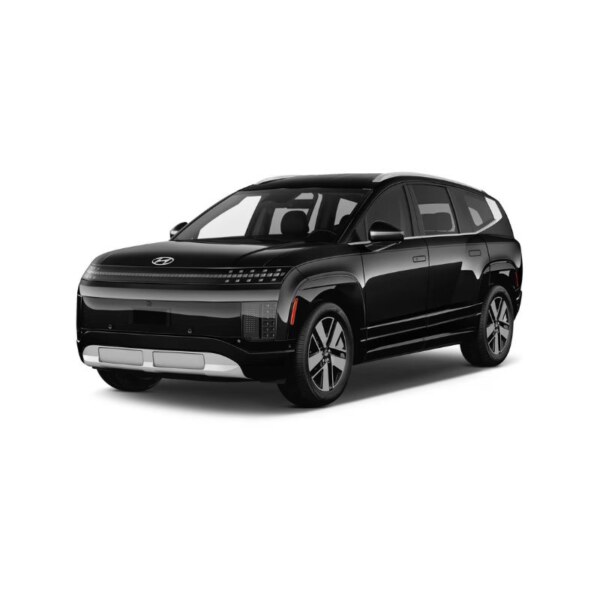
Hyundai IONIQ 9
-
Fuel Type: Electric
-
Engine Power: 215 hp
-
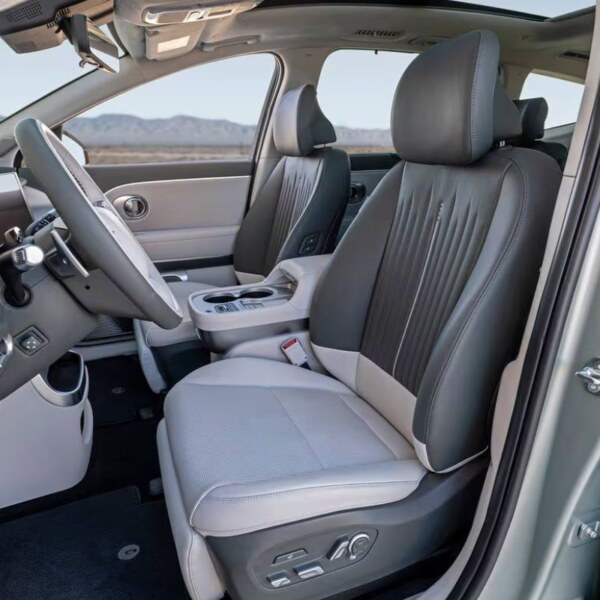
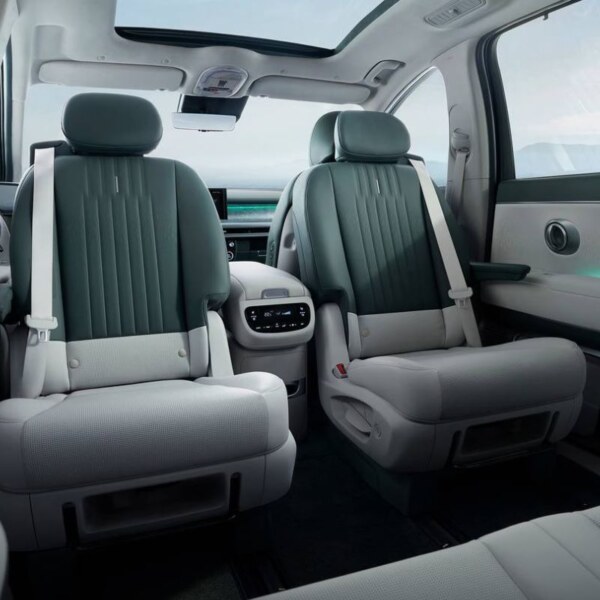
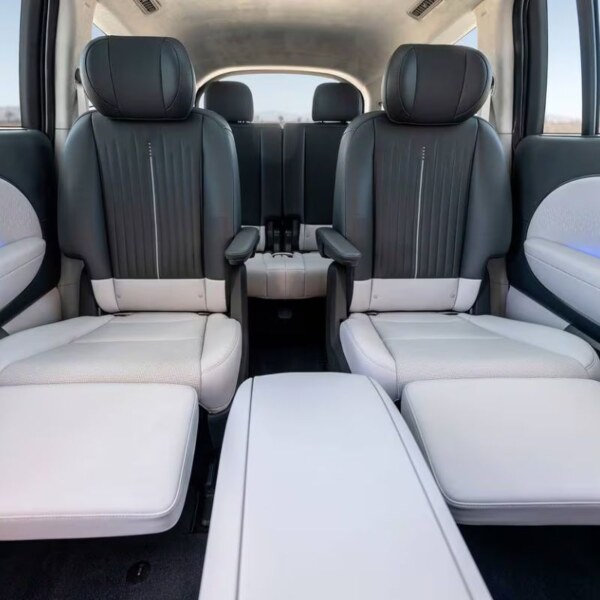
Seat: 7 seats
-
Top Speed: 190 km/h
-
Transmission: direct drive
Full Specifications
Overview
| Models Car models are the different versions or designs of cars made by a manufacturer, each with unique features, styles, and configurations. | S IONIQ 9 |
| Year typically refers to the model year of a vehicle, which indicates its design and production cycle rather than the actual manufacturing date. | 2025 |
| All Electric Range The distance an electric vehicle can travel on a single battery charge without using any gasoline or other fuels. | 335 mi. |
| Combined MPG Combined MPG is the average number of miles a vehicle can travel per gallon of fuel, calculated by blending city and highway driving figures. | 92 MPGe |
| Drive Type A car's drive type refers to which wheels receive power from the engine. For example, front-wheel drive (FWD) powers the front wheels, rear-wheel drive (RWD) powers the rear, and all-wheel drive (AWD) or four-wheel drive (4WD) power all four wheels. | rear wheel drive |
| Total Seating Car total seating refers to the maximum number of passengers a car can accommodate, including the driver. | 7 |
| Bed length | 199.2 in. |
| Cargo Capacity Car cargo capacity is the measurement of the space available in a vehicle for storing items, typically given in cubic feet or liters. | 21.9 cu.ft. |
| Curb Weight Car curb weight is the weight of a vehicle with all standard equipment, fluids, and a full tank of fuel, but without passengers or cargo. | 5,507 lbs. |
| Basic Warranty A Basic Warranty is a manufacturer’s promise to repair or replace parts of a product if they prove defective within a specified period. | 5 yr./ 60,000 mi. |
| Home Charging Time (240V) | 11.7 hr. |
| Towing Capacity | 3,500 lbs. |
| Dealerships Car dealerships are businesses that sell new or used vehicles directly to consumers, often providing financing, trade-ins, and maintenance services. |
13255 SW Farmington Rd, Beaverton, OR 97005 |
Fuel & MPG / Battery & Range
| Fuel type Fuel type refers to the kind of energy source used to power an engine or appliance, such as gasoline, diesel, electricity, or alternative fuels. | Electric |
| Battery capacity Car battery capacity is the amount of electrical energy a battery can store and deliver, usually measured in ampere-hours (Ah). | 110.3 kWh |
| EPA city/highway MPG EPA city/highway MPG refers to the estimated miles per gallon a car gets in city driving and on highways, as measured by the U.S. Environmental Protection Agency. | 103/81 MPGe |
| EPA combined MPGe The EPA combined MPGe rating shows how many miles a car can travel using energy equivalent to one gallon of gasoline, blending city and highway efficiency. | 92 MPGe |
| EPA kWh/100 mi EPA kWh/100 mi is a measure of an electric car's efficiency, showing how many kilowatt-hours of energy the vehicle consumes to travel 100 miles. | 37 |
| Fast-charge port type A car fast-charge port is a high-power charging connector designed to quickly deliver direct current (DC) to an electric vehicle’s battery, reducing charging time compared to standard charging ports. | NACS |
| EPA electricity range The EPA electricity range is the estimated distance an electric vehicle can travel on a single charge, based on standardized tests by the Environmental Protection Agency. | 335 mi. |
| EPA time to charge battery (at 240V) Most electric cars typically require about 8–12 hours for a full charge on a 240V (Level 2) charger, though the exact time depends on the car's battery capacity and efficiency. | 11.7 hr. |
Engine
| Base engine size The car’s base engine size usually refers to its engine displacement, which is the total volume of all the cylinders (measured in liters or cubic centimeters). | Electric |
| Horsepower Car horsepower is a unit of power that measures how much work an engine can perform, with one horsepower roughly equal to 746 watts. | 215 hp |
| Torque Car torque is a measure of the engine's twisting force, indicating its ability to accelerate the vehicle and overcome resistance. | 258 lb-ft |
Towing & Hauling
| Max Payload Capacity | 3,500 lbs. |
Drivetrain
| Transmission A car transmission is the system that transfers power from the engine to the wheels, using different gear ratios to control speed and torque. | 1-speed direct drive |
| Drive Type A car's drive type refers to which wheels receive power from the engine. For example, front-wheel drive (FWD) powers the front wheels, rear-wheel drive (RWD) powers the rear, and all-wheel drive (AWD) or four-wheel drive (4WD) power all four wheels. | Rear wheel drive |
| Descent control | Standard |
Suspension
| Four-wheel independent suspension | Standard |
| Front and rear stabilizer bar | Standard |
Dimensions
| Length | 199.2 in. |
| Overall width with mirrors | 78.0 in. |
| Height | Standard |
| Wheelbase A car's wheelbase is the distance between the centers of its front and rear wheels. | 123.2 in. |
| EPA interior volume | 188.5 cu.ft. |
| Cargo capacity, all seats in place | 21.9 cu.ft. |
| Maximum cargo capacity | 86.9 cu.ft. |
| Manufacturer 0-60 mph acceleration time | 8.4 seconds |
| Turning circle The car turning circle is the smallest circular path a vehicle can complete, reflecting its maneuverability. | 41.0 ft. |
| Ground clearance he distance from the lowest part of the car to the ground. This measurement is important because it determines how well a car can handle rough or uneven terrain. | 6.9 in. |
| Curb Weight Car curb weight is the weight of a vehicle with all standard equipment, fluids, and a full tank of fuel, but without passengers or cargo. | 5,507 lbs. |
| Angle of approach | 20.1 degrees |
| Angle of departure | 22.9 degrees |
| Gross weight Car gross weight is the total weight of the vehicle including passengers, cargo, fuel, and all additional equipment. | 6,900 lbs. |
| Country of final assembly A car’s country of final assembly is the nation where the vehicle is put together into its final form, regardless of where its parts were produced. | United States |
Front Seat Dimensions
| Front head room | 41.0 in. |
| Front leg room | 42.8 in. |
| Front shoulder room | 61.0 in. |
| Front hip room | 57.7 in. |
| Cloth | Standard |
| Bucket front seats | Standard |
| 8-way power driver seat | Standard |
| Height adjustable driver seat | Standard |
| Driver seat with power adjustable lumbar support | Standard |
| 8-way manual passenger seat adjustment | Standard |
| Multi-level heated driver seat | Standard |
| Multi-level heated passenger seat | Standard |
Rear Seat Dimensions
| Rear head room | 41.0 in. |
| Rear leg room | 42.8 in. |
| Rear shoulder room | 61.0 in. |
| Rear hip room | 57.7 in. |
| Folding center armrest | Standard |
| Split-folding rear seatback | Standard |
| Manual folding split-bench third row seats | Standard |
In-Car Entertainment
| Display size | 12.3" |
| Total speakers | 8 |
| AM/FM stereo | Standard |
| Android Auto/Apple CarPlay | Standard |
| USB connection | Standard |
| USB with external media control | Standard |
| Satellite radio satellite radio | Standard |
Power Feature
| 1 one-touch power windows | Standard |
| Hands-free entry | Standard |
| Heated mirrors | Standard |
Instrumentation
| Trip computer | Standard |
| Tachometer | Standard |
| External temperature display | Standard |
| Clock | Standard |
Tires & Wheels
| Painted alloy wheels | Standard |
| Tires Size | 255/60R V |
| Wheels Size | 19 x 8.0 |
| All season tires | Standard |
Telematics
| Emergency Service | Standard |
| Airbag Deployment Notification | Standard |
| Vehicle Alarm notification | Standard |
| Stolen Vehicle Tracking/Assistance | Standard |
| Roadside Assistance | Standard |
Warranty
| Basic | 5 yr./ 60,000 mi. |
| Drivetrain | 10 yr./ 100,000 mi. |
| Rust | 7 yr./ unlimited mi. |
| Roadside Assistance | 5 yr./ unlimited mi. |
PROS
- Long electric range & efficiency: Up to 335 miles of range and 92 MPGe combined, ideal for commuting and road trips.
CONS
- Moderate acceleration: The 0–60 mph time of 8.4 seconds prioritizes comfort over sporty performance.
The 2025 Hyundai IONIQ 9 S is a spacious, all-electric 7-seat SUV built for modern families, offering an impressive 335-mile EPA range from its 110.3-kWh battery, smooth rear-wheel-drive performance with 215 hp, and a refined ride thanks to independent suspension. With fast NACS charging support, generous cargo flexibility up to 86.9 cu. ft., a 3,500-lb towing capacity, and a strong 5-year/60,000-mile basic warranty, this U.S.-assembled EV blends efficiency, comfort, and everyday practicality in a sleek, future-ready package from Hyundai.
Your question is: Hyundai IONIQ 9 S?
Which question will you have about this car? Let’s justify these. There, we are including the major questions and answers about this car. So, let’s start now.
The IONIQ 9 delivers an EPA-estimated range of up to 335 miles on a full charge, making it suitable for daily driving and longer trips.
It offers seating for up to seven passengers across three rows, designed for comfort and flexibility.
Using a 240V Level 2 home charger, the battery can be fully charged in approximately 11.7 hours.
Yes, it comes equipped with a NACS fast-charge port, allowing quicker charging at compatible public stations.
Give Your Reviews or comments
More Cars from Hyundai
New Arrivals
Recent Compares
-
 Lexus RC vs Subaru BRZ
View Comparison →
Lexus RC vs Subaru BRZ
View Comparison →
-
 Volkswagen Jetta GLI vs VinFast VF 8 ECO
View Comparison →
Volkswagen Jetta GLI vs VinFast VF 8 ECO
View Comparison →
-
 Mercedes-Benz EQS SUV 580 4MATIC vs McLaren 750S Spider
View Comparison →
Mercedes-Benz EQS SUV 580 4MATIC vs McLaren 750S Spider
View Comparison →
-
 Mercedes-Benz Maybach S 580 4MATIC® vs McLaren GTS
View Comparison →
Mercedes-Benz Maybach S 580 4MATIC® vs McLaren GTS
View Comparison →
-
 Mazda CX-90 vs Mercedes-Benz AMG GT 53
View Comparison →
Mazda CX-90 vs Mercedes-Benz AMG GT 53
View Comparison →
-
 Maserati Levante vs Mazda CX-30
View Comparison →
Maserati Levante vs Mazda CX-30
View Comparison →
-
 McLaren Artura Spider vs Lexus LC
View Comparison →
McLaren Artura Spider vs Lexus LC
View Comparison →
-
 Lexus LC vs Maserati Grecale Folgore
View Comparison →
Lexus LC vs Maserati Grecale Folgore
View Comparison →
-
 Lincoln Nautilus vs Lexus LX Hybrid
View Comparison →
Lincoln Nautilus vs Lexus LX Hybrid
View Comparison →
-
 Toyota Corolla vs Volvo S60 T8 Polestar Engineered
View Comparison →
Toyota Corolla vs Volvo S60 T8 Polestar Engineered
View Comparison →
-
 Toyota Corolla Cross Hybrid vs Volkswagen Arteon
View Comparison →
Toyota Corolla Cross Hybrid vs Volkswagen Arteon
View Comparison →
-
 Toyota Corolla Cross Hybrid vs Volkswagen Golf GTI
View Comparison →
Toyota Corolla Cross Hybrid vs Volkswagen Golf GTI
View Comparison →