
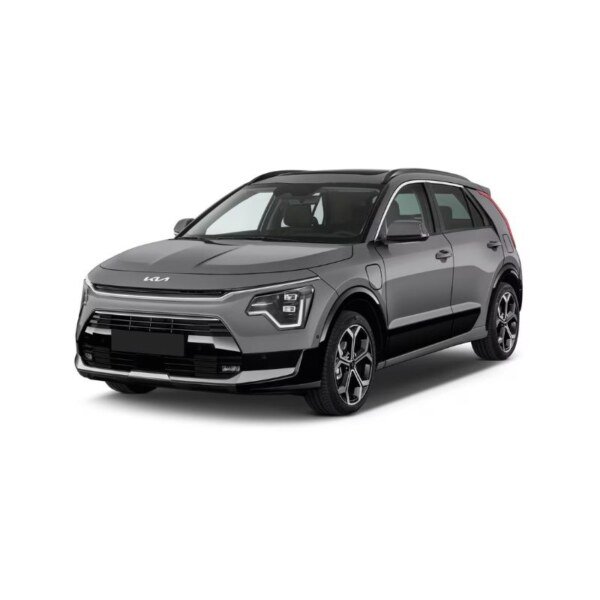
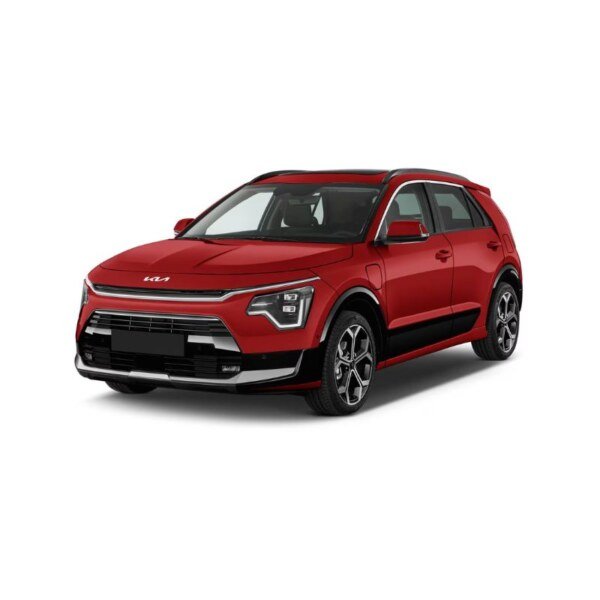
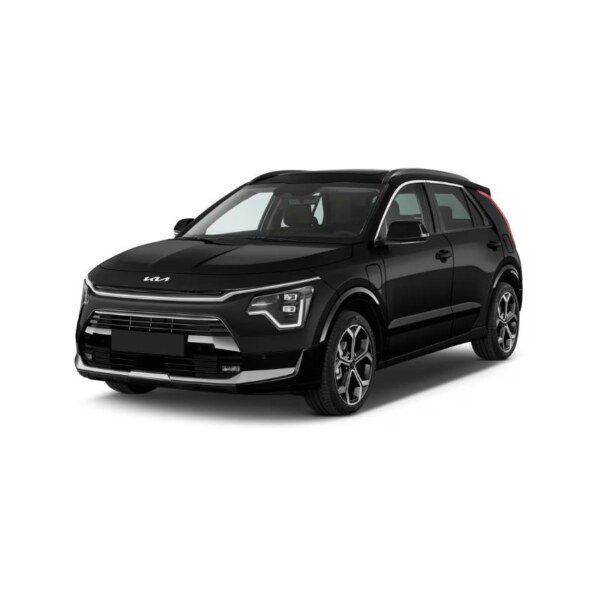
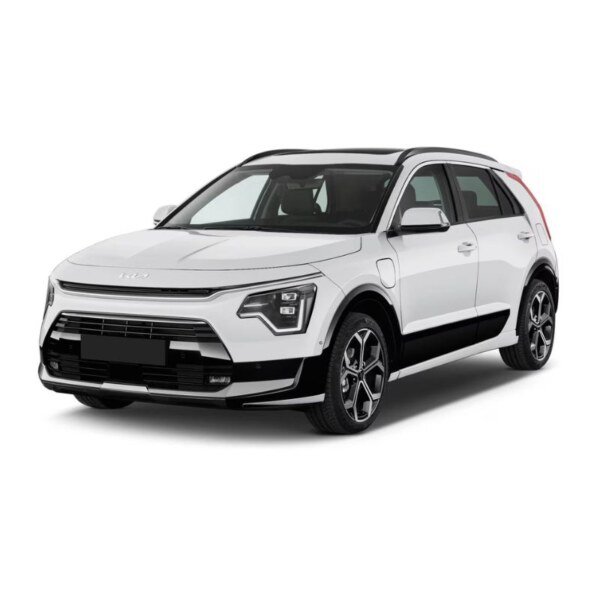
Kia Niro Plug-In Hybrid


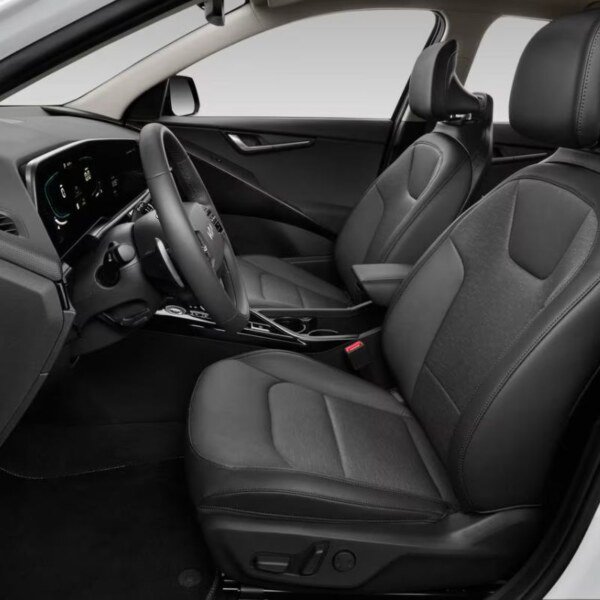
-
Fuel Type: Gas
-
Engine Power: 180 hp
-
Seat: 5 seats
-
Top Speed: 168 km/h
-
Transmission: automate
Full Specifications
Overview
| Models Car models are the different versions or designs of cars made by a manufacturer, each with unique features, styles, and configurations. | Hybrid EX |
| Year typically refers to the model year of a vehicle, which indicates its design and production cycle rather than the actual manufacturing date. | 2025 |
| All Electric Range The distance an electric vehicle can travel on a single battery charge without using any gasoline or other fuels. | 33 mi. |
| Combined MPG Combined MPG is the average number of miles a vehicle can travel per gallon of fuel, calculated by blending city and highway driving figures. | 48 MPG |
| Drive Type A car's drive type refers to which wheels receive power from the engine. For example, front-wheel drive (FWD) powers the front wheels, rear-wheel drive (RWD) powers the rear, and all-wheel drive (AWD) or four-wheel drive (4WD) power all four wheels. | front wheel drive |
| Total Seating Car total seating refers to the maximum number of passengers a car can accommodate, including the driver. | 5 |
| Cargo Capacity Car cargo capacity is the measurement of the space available in a vehicle for storing items, typically given in cubic feet or liters. | 19.4 cu.ft. |
| Curb Weight Car curb weight is the weight of a vehicle with all standard equipment, fluids, and a full tank of fuel, but without passengers or cargo. | 3,497 lbs. |
| Basic Warranty A Basic Warranty is a manufacturer’s promise to repair or replace parts of a product if they prove defective within a specified period. | 5 yr./ 60,000 mi. |
| Dealerships Car dealerships are businesses that sell new or used vehicles directly to consumers, often providing financing, trade-ins, and maintenance services. |
Irvine, California |
Fuel & MPG / Battery & Range
| Fuel type Fuel type refers to the kind of energy source used to power an engine or appliance, such as gasoline, diesel, electricity, or alternative fuels. | Regular unleaded |
| EPA city/highway MPG EPA city/highway MPG refers to the estimated miles per gallon a car gets in city driving and on highways, as measured by the U.S. Environmental Protection Agency. | 49/47 MPG |
| EPA combined MPGe The EPA combined MPGe rating shows how many miles a car can travel using energy equivalent to one gallon of gasoline, blending city and highway efficiency. | 108 MPGe |
| EPA city/highway MPGe EPA city/highway MPGe measures a vehicle's energy efficiency in city and highway driving, expressed in miles per gallon equivalent (MPGe), comparing electric energy use to gasoline consumption. | 113/102 MPGe |
| EPA combined MPG EPA combined MPG stands for Environmental Protection Agency Combined Miles per Gallon. It estimates a vehicle’s fuel efficiency by averaging its performance in both city and highway driving conditions. | 48 MPG |
| Range in miles (city/hwy) Car range refers to the distance a vehicle can travel on a full tank of fuel (or a full battery charge) and is usually measured separately for city driving—which often gives a lower range due to stop-and-go traffic—and highway driving, where steady speeds generally result in a higher range. | 480.2/460.6 mi. |
| EPA kWh/100 mi EPA kWh/100 mi is a measure of an electric car's efficiency, showing how many kilowatt-hours of energy the vehicle consumes to travel 100 miles. | 31 |
| Fuel tank capacity A car's fuel tank capacity is the maximum amount of fuel it can hold, usually measured in liters or gallons. | 9.8 gal. |
| Fast-charge port type A car fast-charge port is a high-power charging connector designed to quickly deliver direct current (DC) to an electric vehicle’s battery, reducing charging time compared to standard charging ports. | SAE J1772 |
| EPA electricity range The EPA electricity range is the estimated distance an electric vehicle can travel on a single charge, based on standardized tests by the Environmental Protection Agency. | 33 mi. |
| EPA time to charge battery (at 240V) Most electric cars typically require about 8–12 hours for a full charge on a 240V (Level 2) charger, though the exact time depends on the car's battery capacity and efficiency. | 2.8 hr. |
| CO2 Emissions Car CO₂ emissions refer to the amount of carbon dioxide released into the atmosphere by a vehicle’s engine as it burns fuel. | 1.6 tons |
Engine
| Base engine size The car’s base engine size usually refers to its engine displacement, which is the total volume of all the cylinders (measured in liters or cubic centimeters). | 1.6 tons |
| Cylinders Car cylinders are the chambers in an engine where the combustion of fuel occurs, driving pistons to create mechanical power. | Inline 4 |
| Base engine type A car’s base engine type refers to its fundamental design—typically the configuration (like inline, V-type, or boxer) and the fuel it uses (gasoline, diesel, etc.). | Plug-in hybrid |
| Horsepower Car horsepower is a unit of power that measures how much work an engine can perform, with one horsepower roughly equal to 746 watts. | 180 hp |
| Torque Car torque is a measure of the engine's twisting force, indicating its ability to accelerate the vehicle and overcome resistance. | 195 lb-ft |
| Valves Car valves are engine components that control the intake of air and fuel and the exhaust of combustion gases. | 16 |
| Cam type generally refers to the configuration of an engine’s camshaft(s). For example, engines can have a single overhead cam (SOHC) or dual overhead cam (DOHC) layout, each affecting valve timing and engine performance differently. | Double overhead cam (DOHC) |
| Valve timing Valve timing is the process of precisely controlling when the engine's intake and exhaust valves open and close to optimize performance and efficiency. | Variable |
| Direct injection Direct injection is a fuel system that injects fuel directly into the engine’s combustion chamber, which improves efficiency, power, and fuel economy. | Standard |
Towing & Hauling
| Max Towing Capacity | N/A |
Drivetrain
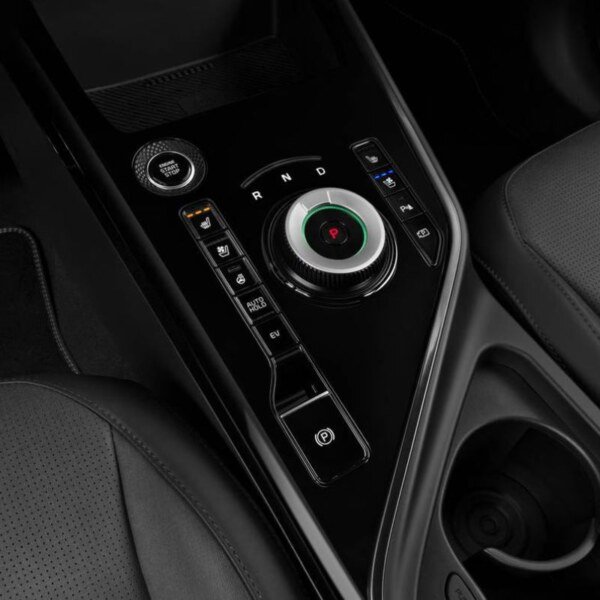
| Transmission A car transmission is the system that transfers power from the engine to the wheels, using different gear ratios to control speed and torque. | 6-speed automated manual |
| Drive Type A car's drive type refers to which wheels receive power from the engine. For example, front-wheel drive (FWD) powers the front wheels, rear-wheel drive (RWD) powers the rear, and all-wheel drive (AWD) or four-wheel drive (4WD) power all four wheels. | Front wheel drive |
| Descent control | Standard |
Suspension
| Four-wheel independent suspension | Standard |
| Front and rear stabilizer bar | Standard |
Dimensions
| Length | 174.0 in. |
| Overall width with mirrors | 71.8 in. |
| Height | 60.8 in. |
| Wheelbase A car's wheelbase is the distance between the centers of its front and rear wheels. | 107.1 in. |
| EPA interior volume | 124.5 cu.ft. |
| Cargo capacity, all seats in place | 19.4 cu.ft. |
| Maximum cargo capacity | 54.6 cu.ft. |
| Turning circle The car turning circle is the smallest circular path a vehicle can complete, reflecting its maneuverability. | 34.8 ft. |
| Ground clearance he distance from the lowest part of the car to the ground. This measurement is important because it determines how well a car can handle rough or uneven terrain. | 6.3 in. |
| Curb Weight Car curb weight is the weight of a vehicle with all standard equipment, fluids, and a full tank of fuel, but without passengers or cargo. | 3,497 lbs. |
| Angle of approach | 15.2 degrees |
| Angle of departure | 27.4 degrees |
| Gross weight Car gross weight is the total weight of the vehicle including passengers, cargo, fuel, and all additional equipment. | 4,497 lbs. |
| Country of final assembly A car’s country of final assembly is the nation where the vehicle is put together into its final form, regardless of where its parts were produced. | South Korea |
Front Seat Dimensions
| Leatherette | Standard |
| Front head room | 40.5 in. |
| Front leg room | 41.5 in. |
| Front shoulder room | 56.2 in. |
| Front hip room | 53.3 in. |
| Cloth | Standard |
| Bucket front seats | Standard |
| Height adjustable driver seat | Standard |
| Driver seat with power adjustable lumbar support | Standard |
| 3 memorized driver seat settings | Standard |
| 8-way manual passenger seat adjustment | Standard |
| Height adjustable passenger seat | Standard |
Rear Seat Dimensions
| Rear head room | 39.5 in. |
| Rear leg room | 39.8 in. |
| Rear shoulder room | 55.4 in. |
| Rear hip room | 53.0 in. |
| Folding center armrest | Standard |
| Split-folding rear seatback | Standard |
In-Car Entertainment
| Display size | 10.3" |
| Total speakers | 6 |
| AM/FM stereo | Standard |
| Android Auto/Apple CarPlay | Standard |
| USB connection | Standard |
| USB with external media control | Standard |
| Satellite radio satellite radio | Standard |
Power Feature
| 4 one-touch power windows | Standard |
| 1st row power glass moonroof | Standard |
| Hands-free entry | Standard |
| Reverse tilt dual mirrors provides curb view when vehicle in reverse | Standard |
Instrumentation
| Trip computer | Standard |
| Compass | Standard |
| Tachometer | Standard |
| External temperature display | Standard |
Tires & Wheels
| Painted alloy wheels | Standard |
| Tires Size | P205/60R H |
| Wheels Size | 16 x 6.5 |
| All season tires | Standard |
Telematics
| Emergency Service | Standard |
| Airbag Deployment Notification | Standard |
| Vehicle Alarm notification | Standard |
| Stolen Vehicle Tracking/Assistance | Standard |
| Roadside Assistance | Standard |
Warranty
| Basic | 5 yr./ 60,000 mi. |
| Drivetrain | 10 yr./ 100,000 mi. |
| EV Battery | 10 yr./ 100,000 mi. |
| Hybrid component | 10 yr./ 100,000 mi. |
PROS
- Excellent fuel economy with strong electric-only capability for daily driving.
CONS
- Limited fast-charging capability compared to full EVs.
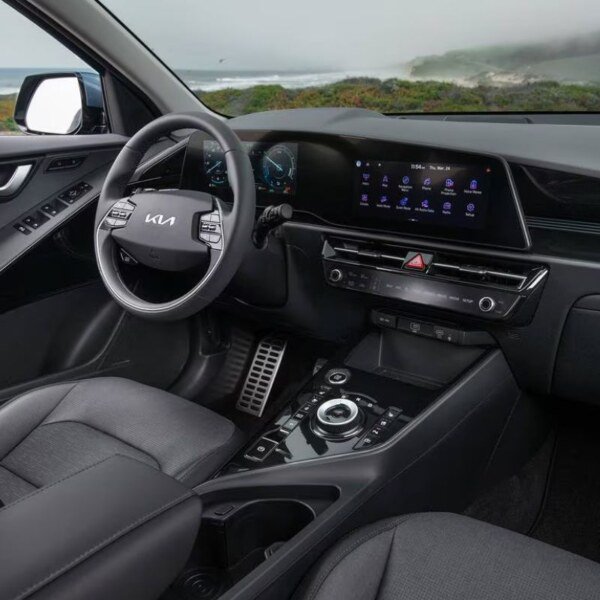
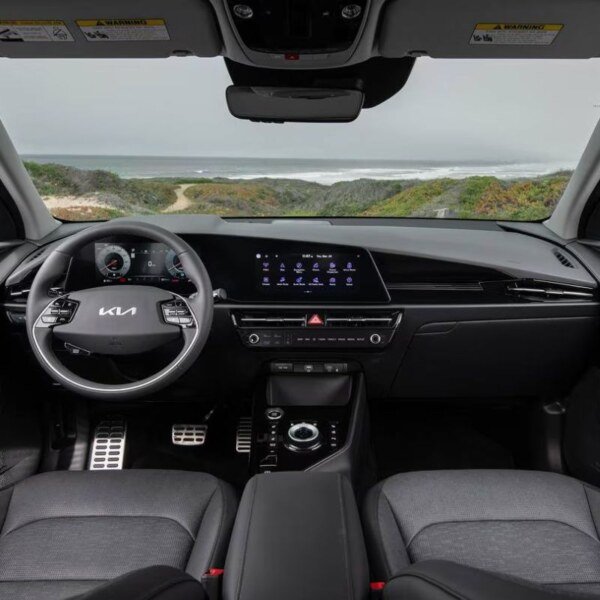
The 2025 Kia Niro Plug-In Hybrid EX delivers a smooth blend of efficiency and everyday practicality with 33 miles of all-electric range, 48 MPG combined, 180-hp performance, roomy seating for five, and 54.6 cu.ft. of max cargo space—all wrapped in a modern, front-wheel-drive design backed by a 5-year/60,000-mile warranty
Your question is: Kia Niro Plug-In Hybrid EX?
Which question will you have about this car? Let’s justify these. There, we are including the major questions and answers about this car. So, let’s start now.
How fuel-efficient is the 2025 Hybrid EX in hybrid mode?
The model delivers an EPA-estimated 48 MPG combined, making it one of the most efficient plug-in hybrids in its class.
Give Your Reviews or comments
More Cars from Kia



New Arrivals


Recent Compares
-
 Lexus RC vs Subaru BRZ
View Comparison →
Lexus RC vs Subaru BRZ
View Comparison →
-
 Volkswagen Jetta GLI vs VinFast VF 8 ECO
View Comparison →
Volkswagen Jetta GLI vs VinFast VF 8 ECO
View Comparison →
-
 Mercedes-Benz EQS SUV 580 4MATIC vs McLaren 750S Spider
View Comparison →
Mercedes-Benz EQS SUV 580 4MATIC vs McLaren 750S Spider
View Comparison →
-
 Mercedes-Benz Maybach S 580 4MATIC® vs McLaren GTS
View Comparison →
Mercedes-Benz Maybach S 580 4MATIC® vs McLaren GTS
View Comparison →
-
 Mazda CX-90 vs Mercedes-Benz AMG GT 53
View Comparison →
Mazda CX-90 vs Mercedes-Benz AMG GT 53
View Comparison →
-
 Maserati Levante vs Mazda CX-30
View Comparison →
Maserati Levante vs Mazda CX-30
View Comparison →
-
 McLaren Artura Spider vs Lexus LC
View Comparison →
McLaren Artura Spider vs Lexus LC
View Comparison →
-
 Lexus LC vs Maserati Grecale Folgore
View Comparison →
Lexus LC vs Maserati Grecale Folgore
View Comparison →
-
 Lincoln Nautilus vs Lexus LX Hybrid
View Comparison →
Lincoln Nautilus vs Lexus LX Hybrid
View Comparison →
-
 Toyota Corolla vs Volvo S60 T8 Polestar Engineered
View Comparison →
Toyota Corolla vs Volvo S60 T8 Polestar Engineered
View Comparison →
-
 Toyota Corolla Cross Hybrid vs Volkswagen Arteon
View Comparison →
Toyota Corolla Cross Hybrid vs Volkswagen Arteon
View Comparison →
-
 Toyota Corolla Cross Hybrid vs Volkswagen Golf GTI
View Comparison →
Toyota Corolla Cross Hybrid vs Volkswagen Golf GTI
View Comparison →